Communication is more than just a convenience in a modern healthcare facility; it’s a critical component of the patient experience. From the moment someone pulls into the parking garage to the minute they receive their discharge papers, the flow of information dictates their levels of comfort and trust.
Digital signage for healthcare has evolved far beyond simple television screens in waiting rooms. Today, a robust digital signage software platform acts as a central nervous system for hospital communications, delivering real-time updates, life-saving alerts, and personalized wayfinding. By replacing static, outdated posters with a dynamic network of digital signs, facilities can transform a stressful medical visit into a streamlined, patient-centric journey.
And it’s not only patients that benefit. Visitors and staff can get updates that are up-to-the-minute, reducing their stress levels as well.
Navigating the Complexities of Healthcare Wayfinding
Hospitals are notoriously difficult to navigate. Large campuses with multiple wings, floors, and similar-looking corridors can lead to wayfinding anxiety, which physically manifests as increased heart rates and elevated stress levels in patients. Research indicates that up to 30% of first-time visitors struggle to find their destination in a hospital setting.
Interactive Kiosks and Digital Directories
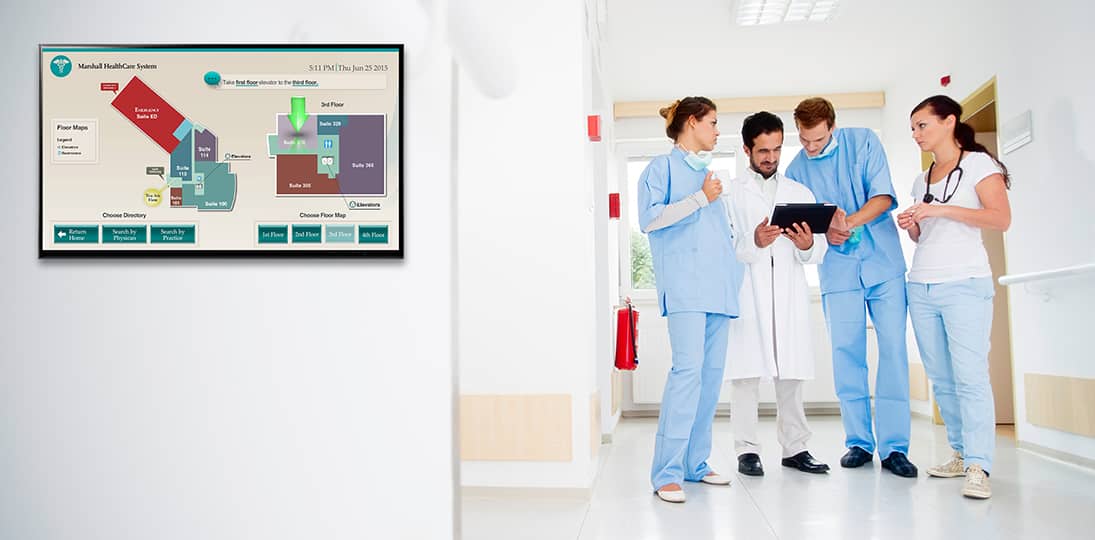
Modern digital signage allows hospitals to implement interactive wayfinding solutions that empower visitors. Rather than searching for a staff member to ask for directions, guests can use touchscreen kiosks to:
- Generate Custom Routes: Visitors can select their destination and see a mapped path from their current location.
- Get a Mobile Handoff: Many kiosks allow users to scan a QR code on their smartphones to take the map with them or send turn-by-turn directions to their phone.
- See ADA Accessible Paths: Digital signs can be programmed to provide routes that avoid stairs or heavy manual doors, ensuring everyone has equal access to care.
Visual Landmarking and Themed Signage
Digital signage allows for visual landmarking. By using consistent colors, icons, and imagery across all digital signs in a specific wing (e.g., pediatric or oncology), the facility becomes much more intuitive to navigate. This reduces the burden on front-desk staff, who often spend a significant portion of their day giving repetitive directions.
Transforming the Waiting Experience
The waiting room is often the most stressful part of a visit – for patients and their loved ones alike. Uncertainty regarding wait times is a primary driver of patient dissatisfaction. Digital signage provides a transparent window into the facility’s operations, significantly improving the visitor experience.
Reducing Perceived Wait Times
Studies show that when people are occupied or informed, time seems to pass faster. By integrating queuing data directly onto digital signs, hospitals can show real-time updates. Providing a countdown or a queue position reduces the anxiety of the unknown. When patients feel they are part of an organized system, their perceived wait time can drop by as much as 35%.
Infotainment and Distraction Therapy
Digital signs in waiting areas shouldn’t just show the news; they should provide a curated mix of infotainment. This might include:
- Health and Wellness Tips: Brief, visually engaging videos on nutrition, exercise, or seasonal health advice (like flu shot reminders).
- Local Conditions: Subscription feeds showing pollen levels, sinus forecast and air quality, along with UV, health, and cold and flu indices.
- Success Spotlights: Bios of world-class physicians or success stories from the research department to build patient confidence.
Curating a “Calm-Tech” Atmosphere
Modern branding in healthcare is shifting away from clinical coldness and toward “wellness hospitality”. Digital signs play a key role here by utilizing “calm-tech” principles. Instead of jarring, loud television broadcasts, digital signs can display:
- Aesthetic Ambient Content: High-resolution nature videography or local landscape photography have been shown to lower blood pressure and anxiety in clinical settings.
- Community Stories: Narratives about local health heroes or volunteer initiatives that humanize the institution.
- Virtual Tours: Snippets of new wings or specialized labs and services to familiarize patients with the facility’s growth.
By thoughtfully curating what appears on your digital signs, you aren’t just showing pictures, you’re actively managing the emotional climate of your building. This builds long-term brand loyalty and transforms a sterile environment into a welcoming community hub.
Enhancing Clinical Efficiency and Staff Communication
While patient-facing signs are vital, the employee engagement applications of digital signage software are equally transformative. In a fast-paced medical environment, miscommunication can lead to costly errors – accurate, updated information is critical.
Digital Room Signs and Resource Management
Managing shared spaces like consultation rooms, labs, and meeting spaces is a logistical challenge. Digital room signs, often small, sleek displays mounted outside doorways, connect directly to the hospital’s scheduling software (such as Microsoft 365, Google Calendar, or EMS).
- Real-time Availability: These signs glow green when a room is vacant and red when occupied, preventing awkward interruptions during sensitive consultations.
- ePaper Desk Signs: For administrative areas using hotdesking, small ePaper signs can show who is at a desk or in a room for the day, improving office flow.
Internal Communications for a 24/7 Workforce
Healthcare workers rarely sit at a desk to check emails. Digital signs in break rooms, locker areas, and nurses’ stations serve as the primary channel for internal comms. They can be used to show:
- New policy updates or compliance reminders.
- Shift changes and emergency staffing needs.
- Employee recognition to boost morale and reduce burnout in high-stress departments.
Prioritizing Safety and Emergency Preparedness
In an emergency, every second counts. A facility-wide network of digital signs is the fastest way to communicate urgent instructions to a large, diverse group of people.
Instant Emergency Overrides
Using centralized digital signage software, administrators can trigger a facility-wide alert mode with a single click. This overrides all current playlists to display:
- Facility-Defined Alerts: Broadcast internal staff codes instantly across relevant areas of the facility, without exposing sensitive information in public spaces.
- Weather Warnings: Provide instructions on where to seek shelter during a storm or other extreme weather event.
- Evacuation Routes: Show clear exit paths during fire or security incidents, with follow-up instructions and guidelines.
Because digital signs are bright and dynamic, they are far more likely to grab attention than a traditional intercom announcement, which may be missed in a noisy environment or by those with hearing impairments. CAP alert integration ensures that officially declared emergencies trigger your signage automatically, with no manual intervention required
Promoting Services While Reducing Waste
Digital signage doesn’t just save money; it’s a tool for financial and environmental sustainability.
Advertising Services and Amenities
Hospitals often have pharmacies, gift shops, cafeterias, and specialized outpatient clinics. Digital signs can act as a subtle marketing tool to drive revenue to these areas:
- Daily Menus: Digital menu boards in the cafeteria can be updated instantly to reflect sold-out items or nutritional information.
- Pharmacy Reminders: Reminding patients they can pick up their prescriptions on-site before they leave.
- Philanthropy: Interactive donor walls replace static plaques, allowing the hospital to tell the story of their benefactors through video and interactive timelines, which often inspires further giving.
The Move Toward a Paperless Facility
Traditional printed signage is expensive, labor-intensive, and wasteful. Every time a doctor changes offices or a policy changes, paper signs must be printed and manually hung. Digital signage eliminates this waste. It allows for green communication, saves thousands of dollars annually in printing costs, and reduces the facility’s carbon footprint.
Building a Modern Healthcare Brand
A facility’s brand is defined by more than just clinical outcomes; it’s defined by the atmosphere of care. First impressions are formed within seconds of a patient walking through the front doors. Digital signage in a hospital or clinic serves as a visual shorthand for excellence, signaling to patients, families, and high-tier medical talent that your facility is at the cutting edge of modern technology, and that they are in safe hands.
Projecting Innovation and Clinical Excellence
A facility filled with taped-up paper signs and static, yellowing directories sends a subconscious message of being outdated. Conversely, a network of sleek, high-definition digital signs projects an image of precision and forward-thinking. When a patient sees a facility invested in the latest communication tools, that trust often extends to the medical care itself. It suggests that if a hospital is this organized with its information, it must be equally meticulous with its diagnostics and treatments.
Consistent Messaging Across the Campus
Maintaining a cohesive brand voice across a sprawling medical campus is a challenge. Digital signage software allows marketing teams to push brand-approved content (colors, logos, and tone of voice) to every screen in the network instantly. This ensures that whether a patient is in the main lobby, a satellite clinic, or the oncology wing, they feel they are within the same trusted ecosystem of care.
A Seamlessly Connected Care Environment
Healthcare digital signage is about more than just screens – it’s about creating a connected environment where information flows freely and in real time. By leveraging a comprehensive digital signage software solution, providers can reduce stress for their patients, empower their staff with better data, and ensure that their facility operates at peak efficiency.
As the medical world continues to evolve, those who embrace digital communication will be best positioned to provide the high-level, empathetic care that patients want and deserve.
Healthcare Digital Signage: Frequently Asked Questions
What are the main benefits of digital signage in healthcare?
Digital signage reduces patient anxiety through clear wayfinding and real-time queue updates, which can lower perceived wait times by as much as 35%. For staff, screens in break rooms and nurses’ stations deliver policy updates, shift changes, and recognition to a workforce that’s rarely at a desk. Facility-wide, a networked system can override all screens instantly to broadcast emergency alerts and evacuation routes. Long-term, digital signs cut printing costs, reduce paper waste, and project a modern brand that builds patient trust from the moment they walk through the door.
How does digital signage improve the patient experience?
Digital signage reduces patient anxiety by providing clear, interactive wayfinding to prevent getting lost. It also lowers perceived wait times in lobbies by providing engaging infotainment and real-time queue updates, making the transition from the waiting room to the exam room feel much faster.
Can digital signage integrate with existing hospital systems?
Yes. Modern digital signage software can integrate with various data sources, including room scheduling and emergency alert systems for instant, facility-wide safety broadcasts. Platforms can also pull data from common sources like Excel, XML, and JSON.
What are the best locations for digital signs in a hospital?
High-impact locations include main lobbies for wayfinding kiosks, waiting areas for health education, and elevator banks for general news. Additionally, digital room signs outside exam rooms and back-of-house displays at nursing stations are essential for staff coordination.
How does digital signage assist with emergency protocols?
Digital signs act as a visual mass notification system. In the event of a fire, weather emergency, or security threat, the software can trigger an immediate override that replaces current content with clear evacuation routes and safety instructions. CAP alerts help the facility stay on top of developing situations they may need to respond to quickly.
Can digital signs be used for donor recognition?
Absolutely. Interactive donor walls allow facilities to move beyond static plaques. You can feature searchable databases, video testimonials of the donor’s impact, and “Give Now” QR codes, making the recognition process more engaging and inspiring for future benefactors.