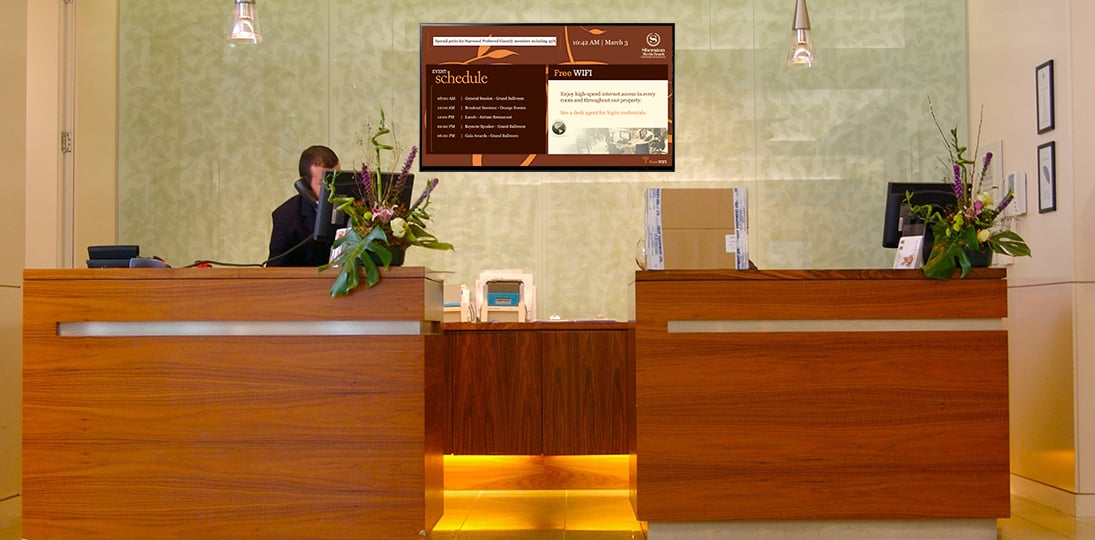
The guest experience begins long before a visitor reaches the front desk and extends far beyond the four walls of their hotel room. As the lines between our physical and digital lives continue to blur, hotels are finding that traditional paper-based communication is no longer enough to satisfy the modern traveler.
Hotel digital signage solutions serve as the ultimate bridge between the offline and online worlds, transforming the hotel environment into an information-rich, guest-centric sanctuary. By leveraging digital signage software, interactive kiosks, and mobile integration, hospitality brands can prioritize their visitors, streamline operations, and drive brand loyalty.
Below, we cover the top content ideas, hardware types, and best practices for getting the most from your hotel digital signage investment.
The New Standard: Why Digital Signage is Essential for Modern Hotels
The hospitality industry thrives on a simple philosophy: the customer always comes first. However, the way we serve those customers has undergone a radical transformation. Today’s travelers, spanning all generations and hailing from every part of the globe, carry the world in their pockets via smartphones. They expect information to be instantaneous, accessible, and personalized.
Digital signage is no longer a luxury; it is a critical communication infrastructure. It allows hotels to move away from static, expensive, and quickly outdated paper brochures toward a dynamic ecosystem where information flows in real time. Whether it’s a massive video wall in the lobby or a discreet digital room sign outside a conference hall, digital signs provide a modern touchpoint that resonates with tech-savvy guests.
Prioritizing the Guest Through Information Access
Luxury in the modern era is defined by choice, access, and familiarity. By developing a comprehensive digital hospitality signage strategy, hotels can replicate the comforts of home, where answers are just a click or a glance away. This proactive approach to communication reduces “information anxiety” for travelers, especially those in unfamiliar cities or those who speak different languages.
Multi-Language Support
In our globalized world, a “one-size-fits-all” language approach is no longer sufficient. Interactive digital signs allow guests to select their preferred language with a single tap. This instantly makes international visitors feel more at home and reduces the pressure on your staff to be multilingual experts.
10 Essential Content Pillars for Your Digital Hotel Signs
The right content strategy is what separates a forgettable screen from a genuinely useful guest touchpoint. Here are 10 high-impact content ideas every hotel should consider:
1. Dynamic Announcements and Welcome Messages
First impressions are often formed within the first ten minutes of arrival. Use your lobby displays to greet guests with personalized welcome messages, highlight special offers, and announce upcoming on-site events. For a dual-purpose strategy, use back-office screens to keep employees informed of vacancy reports, VIP arrivals, and sales targets.
2. Interactive Wayfinding and Directories
Nothing frustrates a guest more than getting lost. Interactive wayfinding on touchscreens allows guests to navigate complex floor plans and locate elevators and amenities like the gym or business center. Providing point-to-point directions on screens frees your concierge from answering the same “Where’s the ATM?” question hundreds of times a day.
3. Automated Event Schedules
By integrating your digital signage software with your property management or calendaring system, you can automate event listings. Digital room signs can display the current meeting in progress, upcoming break schedules, and even directional arrows for attendees, ensuring a seamless flow for conference and event guests.
4. Real-Time Weather and Local Time
Travelers need to plan their day. Providing a five-day forecast and current outdoor temperatures helps guests decide whether to pack an umbrella or book an outdoor excursion. It’s a small detail that shows the hotel is looking out for their comfort and anticipating their needs.
5. Seamless Transportation Information
The lobby is the perfect place for commuter data. Show local airport departure and arrival boards, estimated taxi fares, and public transportation schedules. You can even include QR codes that allow guests to “take the data with them” on their mobile devices.
6. Business and Financial Feeds
For the corporate traveler, time is money. Displaying live stock market updates (NASDAQ, NYSE), currency exchange rates, and breaking business news adds a level of sophistication and utility to your lounge or business center signage.
7. Critical Emergency Alerts
Safety is the ultimate priority. In the event of severe weather or a security situation, your digital signage system acts as a mass notification tool. With a single command, you can override all content with clear, concise instructions to guide guests and staff to safety.
8. Revenue-Generating Advertising
Digital signs are a powerful tool for upselling. Promote your on-site spa, happy hour specials in the bar, or breakfast deals in the café. You can also partner with local vendors, such as tour operators or high-end boutiques, to sell advertising space, creating a new revenue stream for your venue.
9. Property Highlights and Visual Tours
Don’t just tell guests about your amenities; show them. Use high-definition photography and video to showcase the pool at sunset, the signature dishes in your restaurant, or the tranquility of the spa. Seeing these visuals often triggers an impulse buy or a last-minute booking.
10. Brand Awareness and Social Proof
Display your hotel’s social media feeds, live testimonials, and loyalty program perks. Encouraging guests to see their own tagged photos on the big screen fosters a sense of community and makes them feel like part of your brand family.
The Power Trio: Wall Displays, Touchscreens, and Kiosks
To create a truly info-rich environment, you must deploy a variety of hardware types, each serving a specific functional and psychological need of the guest.
Wall-Mounted Displays: The Passive Informant
Strategically placed in high-traffic areas like elevator banks and check-in lines, these displays capture the passive attention of guests. While they wait, they learn. This reduces perceived wait times and prepares the guest for their interaction with staff, making the check-in process or navigating the facility faster and more efficient.
Interactive Touchscreens: The Self-Service Specialist
Touchscreens empower the guest. They allow for deep-dive exploration into directories, local attractions, and detailed menus without overwhelming the user with a 20-minute loop of content. In a “digital lounge” setting, these screens become a destination where guests can relax and plan their stay at their own pace.
Digital Kiosks: The 24/7 Concierge
Kiosks offer the ultimate flexibility because they can be placed anywhere, from the middle of a large atrium to a hallway near the spa.
- Lobby Kiosks: Can facilitate fast check-in and checkout.
- Corridor Kiosks: Allow guests to book a dinner reservation or spa treatment without walking to the front desk.
- Bar/Café Kiosks: Display menus, give detailed nutritional and allergy information, and can even facilitate ordering.
Modern kiosks are essentially “giant tablets.” Because people are already comfortable with tablet interfaces, the learning curve is zero. Furthermore, these devices can be designed to meet ADA guidelines, ensuring that information is accessible to every guest, regardless of physical ability.
Bridging the Offline and Online Worlds
The most successful hospitality venues are those that view digital signage as part of an “omni-channel” experience. This means the message the guest sees on the lobby screen is the same message they see in their hotel app and on their in-room TV.
Integrating Mobile with BYOD (Bring Your Own Device)
The line between a physical sign and a personal device is disappearing. By using QR codes on your digital signage, you can “handoff” information to the guest’s smartphone. Whether it’s a map of the city, a digital coupon for the hotel bar, or a link to a satisfaction survey, this integration ensures that your communications remain with the guest, even after they leave the lobby.
Proximity Beacons and Wayfinding
By combining digital signage with proximity technology (like Bluetooth beacons), you can send turn-by-turn directions directly to a guest’s phone as they move through your hallways. This “blue-dot” navigation is the gold standard for large resorts and convention hotels where finding a specific ballroom or poolside changing room can be a challenge.
Enhancing the Employee Experience (The Back-of-House Benefit)
While much of the focus is on guests, digital signage is equally vital for internal communications. A hotel is a complex machine with hundreds of moving parts – front desk, housekeeping, maintenance, catering, security, and more.
Using digital signs in breakrooms and loading docks helps:
- Foster Culture: Display employee of the month photos, birthdays, and work anniversaries.
- Improve Safety: Show real-time safety metrics, “days since last accident,” and proper lifting techniques.
- Streamline Operations: Display daily occupancy rates, VIP lists, and shift changes, so every staff member is on the same page.
When employees are well-informed and feel valued, they provide better service to the guests. They, too, feel taken care of, and they’ll naturally pass along that sensibility to the guests. In this way, digital signage improves the overall guest experience from the inside out.
Measuring the Impact: The Multi-Layered ROI of Digital Signage
For hotel owners and stakeholders, digital signage is often viewed as a capital expenditure. However, when integrated with robust digital signage software, it quickly reveals itself as a high-yield investment. The return on investment (ROI) in a hospitality environment is found in the intersection of operational savings and revenue generation.
Drastic Reduction in Recurring Print Costs
The most immediate hard ROI comes from the elimination of static print materials. Think of the thousands of dollars spent annually on:
- In-room guest directories that require manual updating.
- Lobby posters for seasonal events or restaurant specials.
- Wayfinding maps that become obsolete the moment a renovation occurs.
- Paper-based meeting room inserts that must be swapped out daily.
With digital signs, these costs drop to near zero. A single update in your CMS pushes changes to every screen you choose instantly, ensuring that information is always current.
Labor Optimization and Staff Efficiency
Labor is the single highest expense for most hotels. Digital signage acts as a force multiplier for your team. By using kiosks and interactive wayfinding to handle routine queries (such as “Where is the gym?” or “What time is checkout?”), your front desk and concierge staff are freed up to handle complex guest needs that actually require a human touch.
- The ROI Calculation: If a digital kiosk deflects just 20 five-minute guest inquiries per day, that saves over 600 labor hours per year.
Boosting Incremental Ancillary Revenue
Digital signage is your most effective upselling tool because it reaches guests at the “point of hunger” or the “point of boredom.”
- The Happy Hour Effect: A vibrant, high-definition video of a signature cocktail shown near the elevator banks at 5:00 PM can drive a measurable spike in bar revenue.
- Last-Minute Spa Bookings: Use your screens to offer “Flash Sales” on open spa slots for that afternoon. An empty massage table is a wasted asset; a digital sign ensures it stays occupied.
- Third-Party Advertising: Many hotels offset the cost of their entire signage network by selling “Digital Ad Packages” to local tour operators, high-end retailers, or transport services.
Data-Driven Decision Making
Unlike a paper brochure, interactive touchscreens provide a “digital breadcrumb trail.” Modern digital signage software allows you to pull analytics on:
- Popular Search Terms: Are guests constantly searching for a local pharmacy? Maybe it’s time to stock more sundries in your gift shop.
- Engagement Heatmaps: Which screens are getting the most interaction? Use this data to determine where your highest-value promotions should live.
- Peak Usage Times: Align your content strategy with guest flow, showing breakfast specials in the morning and theater tickets in the evening.
Increased Brand Value and Guest Retention
While harder to quantify, the soft ROI of a modern, tech-forward environment is undeniable. In an era of online reviews, a seamless, frustration-free stay leads to higher Tripadvisor and Google ratings. High-tech amenities are often the deciding factor for corporate event planners when choosing a venue, directly impacting your group booking rates.
Building Loyalty through Digital Innovation
The hotels that win on loyalty aren’t necessarily the ones with the most amenities. They’re the ones that make guests feel effortlessly informed and genuinely cared for at every turn.
Digital signage doesn’t replace the human touch; it protects it. By automating the routine (wayfinding, scheduling, basic FAQs), you free your staff to do what no screen ever can: deliver the kind of personalized, attentive service that turns a first-time visitor into a repeat guest.
That’s the real value of a well-executed hotel digital signage strategy. Not just better screens, but a better experience for your guests and staff, and your bottom line.
Key Takeaways for Hotel Managers:
- Be Strategic: Place screens where guests naturally linger or need information (elevators, check-in desks, bars).
- Be Dynamic: Use digital signage software to automate content and keep it fresh.
- Be Interactive: Give guests the power to find their own answers via touchscreens and kiosks.
- Be Integrated: Connect your signage to mobile apps and QR codes for a seamless guest journey.
- Be Safe: Always have a plan for emergency overrides to ensure guest security.