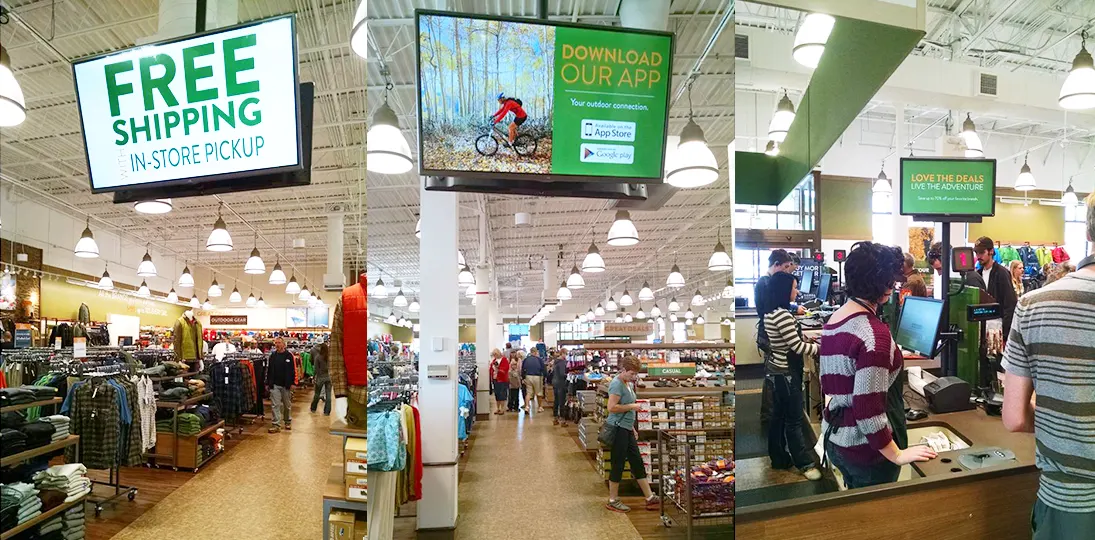
In today’s fast-paced brick-and-mortar landscape, the challenge for retailers is no longer just about having the right inventory – it’s about capturing attention in a world of digital distractions, getting a slice of the attention economy. Retailers are increasingly turning to in-store digital signage to bridge the gap between the online and physical shopping worlds.
According to some studies, four out of five brands notice a 33% increase in sales after adopting a digital signage system, which is significant. But the benefits go far beyond just higher revenue. From streamlining operations to creating immersive brand stories, digital signs are the engine driving the modern “retailtainment” experience.
Why Every Retailer Needs a Digital Signage Strategy
Traditional print posters are static, expensive to replace, and often ignored. In contrast, digital signage is dynamic, vibrant, and impossible to miss. Humans are biologically hard-wired to notice movement. Studies show that digital signage has a recall rate exceeding 83%, and people retain information from video over 50% more effectively than from text.
Bridging the Online and In-Store Experience
One of the most powerful benefits of digital signage for retailers is its ability to create a “phygital” environment. Customers who are used to the convenience of information-rich online shopping often feel “blind” in a physical store. Digital signage software allows you to bring the best parts of the web, like product reviews, social media feeds, and deep-dive technical specs, directly to the shop floor.
Real-Time Agility and Efficiency
With a robust digital signage CMS (Content Management System), retailers can update prices, announce flash sales, or change messaging across a global network of stores in seconds. This eliminates the waste and lead time associated with printing and shipping physical banners, allowing you to react to inventory changes or local trends instantly (e.g., promoting umbrellas the moment it starts raining outside).
Boosting Operational Revenue
Beyond selling your own products, your screens are valuable real estate. Many retailers now monetize their digital signs by selling advertising space to other vendors or local partners, creating a secondary revenue stream that can quickly offset the initial hardware investment.
8 Key Benefits of Digital Signage for Retailers
If you’re still on the fence about upgrading to displays, consider these eight transformative advantages:
1. Amplifying Your Brand Story
Digital signs allow you to go beyond “Buy Now” ads. You can use them to showcase your mission, values, and community projects. Whether it’s showing the artisan process behind your products or your commitment to sustainability, storytelling builds an emotional connection that static signs cannot achieve. For a more literal type of amplification, use an impressive video wall.
2. Reducing Perceived Wait Times
Long checkout lines are the leading cause of “cart abandonment.” Placing digital signage in queuing areas provides entertainment (news, trivia, or “how-to” videos) that makes a five-minute wait feel like two.
3. Immersive and Interactive Experiences
Some digital signage software supports motion sensors and “Lift and Learn” technology. When a customer picks up a product, the screen automatically displays its price and features (nutritional information, where it was sourced, carbon footprint, etc.). This level of immersion keeps customers in-store longer, becoming a value-add and increasing the likelihood of a purchase.
4. Staff Empowerment and Internal Comms
Digital signs aren’t just for customers. In break rooms and back-of-house areas, they can be used to show sales targets, training videos, and health and safety alerts, ensuring your deskless workforce stays informed and motivated.
5. Streamlining the Customer Journey
Large retail venues can be overwhelming. Digital wayfinding and directories on touchscreens help customers find specific departments, restrooms, or ATMs, reducing frustration and improving the overall experience.
6. Driving Impulse Purchases with POS Ads
The point of sale (POS) is your last chance to increase the basket size. Use digital signs near the register to promote “grab-and-go” items, loyalty program sign-ups, or limited-time digital coupons.
7. Enhancing Social Proof
By pulling live social media feeds onto your screens, you show prospective buyers that other people are loving your products in real-time. This user-generated content acts as a powerful, authentic endorsement.
8. Sustainability and Waste Reduction
Retailers spend thousands annually on paper, ink, and shipping for temporary graphics, not to mention the work hours spent installing and later removing those. Digital signage is a one-time hardware investment that drastically reduces your carbon footprint by eliminating this physical waste.
Maximizing ROI: Best Practices for Digital Signage Software
To ensure your digital signage in retail environments is effective, follow these strategic guidelines:
Centralized Management
Make sure your digital signage software allows for centralized control. You should be able to manage one screen or one thousand from a single dashboard. This guarantees brand consistency across all locations.
Strategic Placement
Avoid placing screens where people are in a hurry, such as at the entrance or exit. Instead, place them in “dwell zones” – places where people naturally linger, like at the end of aisles, in cafes, or near the checkout.
Call to Action (CTA)
Every piece of content should have a goal. Whether it’s “Follow us on Instagram,” “Ask a staff member for a demo,” or “Scan for 10% off,” make sure your audience knows what to do next.
Design for the Medium
Digital signs are viewed from a distance. Use large, legible fonts, high-contrast colors, and keep text concise. A good rule of thumb is the three-second rule: if a passerby can’t understand the message in three seconds, it’s too complex.
Scheduling for the Audience
Use your digital signage software’s scheduling tools to change content based on the time of day. A grocery store might show breakfast items and coffee in the morning, then switch to easy dinner recipes and wine pairings in the evening.
15 Innovative Content Ideas for Your Retail Digital Signs
The success of your digital signage depends entirely on the quality of your content. Here are fifteen ideas to keep your screens fresh and engaging:
1. High-Definition Product Showcases
Don’t just show a photo; show the product in action. High-definition video of a garment moving or a kitchen appliance being used provides more clarity and desire than a static image.
2. Educational “How-To” Content
If you sell complex products or services (like tools, skincare, or tech), use your screens to show tutorials. When customers understand how to use a product, they are more confident in buying it.
3. Brand Storytelling & Mission
Share your history. Where did your brand start? What are your values? Use evocative descriptions and “behind the scenes” footage of your team to humanize your brand.
4. Digital Coupons and QR Codes
Create a sense of urgency. Display a “Flash Sale” code (e.g., “Use SAVE10 for the next 60 minutes”) that shoppers can scan or mention at checkout.
5. Social Media Integration
Encourage shoppers to post photos with a specific hashtag and display those posts on a “social wall.” This bridges the gap between your physical location and your digital community.
6. Wayfinding & Interactive Directories
In malls or large department stores, use digital signs to guide the way. Interactive maps can even allow users to scan a QR code to take the map with them on their phones.
7. Real-Time Inventory Updates
Save your staff and customers time by showing current stock levels. If a popular item is “Low in Stock” or “Coming Soon,” data-driven digital signage can manage expectations and drive faster decision-making.
8. Staff Highlights and Recommendations
“Employee Picks” add a personal, boutique feel to large stores. Feature a photo of a staff member with their favorite product and a short quote on why they love it.
9. Customer Reviews and Testimonials
Bring five-star ratings from your website to the aisle. Seeing a positive testimonial right next to the physical product provides the final “nudge” many shoppers need.
10. Interactive Polls and Surveys
Engage your audience by asking for their opinion. “Which color do you prefer for our next collection?” This provides you with valuable data while making the customer feel heard.
11. Event and Workshop Announcements
If your venue hosts cooking classes, book signings, or DIY workshops, use digital signage to promote events and advertise schedules. Allow people to sign up via on-screen QR codes.
12. Localized Non-Branded Content
Attract eyeballs by showing useful information like the local weather, news tickers, or commute times. Once you’ve captured their attention, you can rotate back to your promotional content.
13. Comparison Charts
Help customers choose between two models of a product by showing a side-by-side comparison of features and prices. This self-service information speeds up the buying process.
14. Gamification and Trivia
Keep children (and adults) entertained with interactive games or trivia questions. This is particularly effective in waiting areas or “chill-out” zones within a store.
15. Cross-Sells and Up-Sells
If a customer is looking at a camera you sell, use a nearby screen to show compatible lenses and bags. Digital signage is the perfect “silent salesperson” for suggesting complementary items.
The Future of Retail: Interactive Kiosks and Beyond
Digital signage use has taken off in recent years, and in the future, its role will only expand. We are seeing the rise of:
- Virtual Try-Ons: “Magic mirrors” that allow customers to see how clothes look without entering a fitting room.
- AI-Driven Content: Screens that use anonymous sensors to detect the age or gender of a shopper and adjust the ads accordingly.
- Endless Aisle Kiosks: Allowing customers to browse and order items that aren’t physically in the store, preventing lost sales due to stockouts.
Transforming Your Retail Environment
Digital signage is no longer just a luxury for big-box retailers; it is a vital tool for any business that wants to remain competitive. By using digital signage software to deliver the right message at the right time, you can transform your store from a simple place of transaction into a dynamic, engaging, and memorable brand destination.
Whether you are looking to increase sales, improve the customer experience, or simply modernize your brand, the path forward is clear: it’s time to go digital. With the right content strategy and a robust software platform, your digital signs will become the most hardworking members of your sales team.